From the tap to the lawn
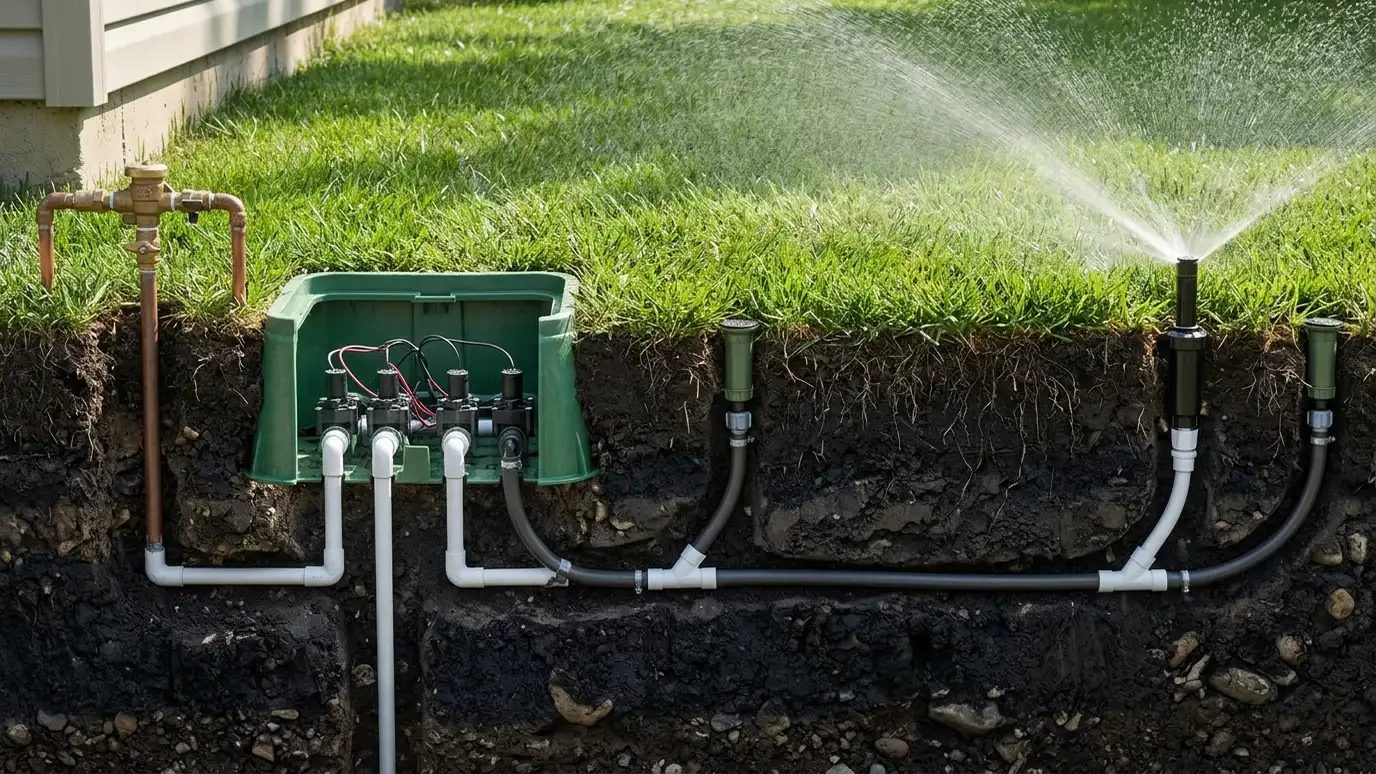
Water enters the system from a connection to your water supply, a meter or a well. It passes through a backflow preventer, which protects drinking water, and then into a mainline that feeds the valves.
Each valve controls one zone. When a valve opens, water flows through lateral pipe to the heads in that zone and nowhere else.
Zones and valves
A zone is a group of heads that run together. Zones exist because your supply can only deliver a limited flow, so the yard is divided into sections that run one after another.
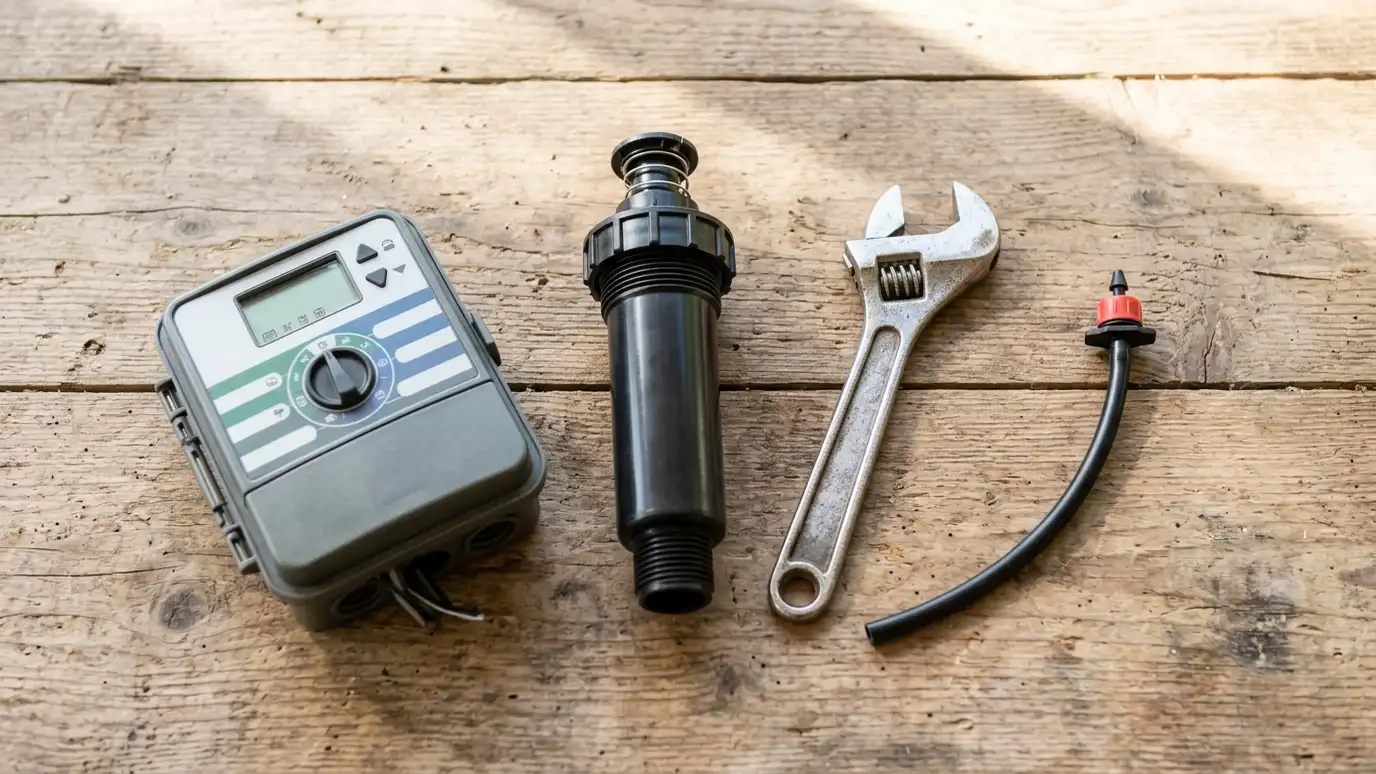
Valves sit in boxes in the lawn. Each one has a solenoid that opens when the controller sends a small electric signal along a wire.
Heads and nozzles
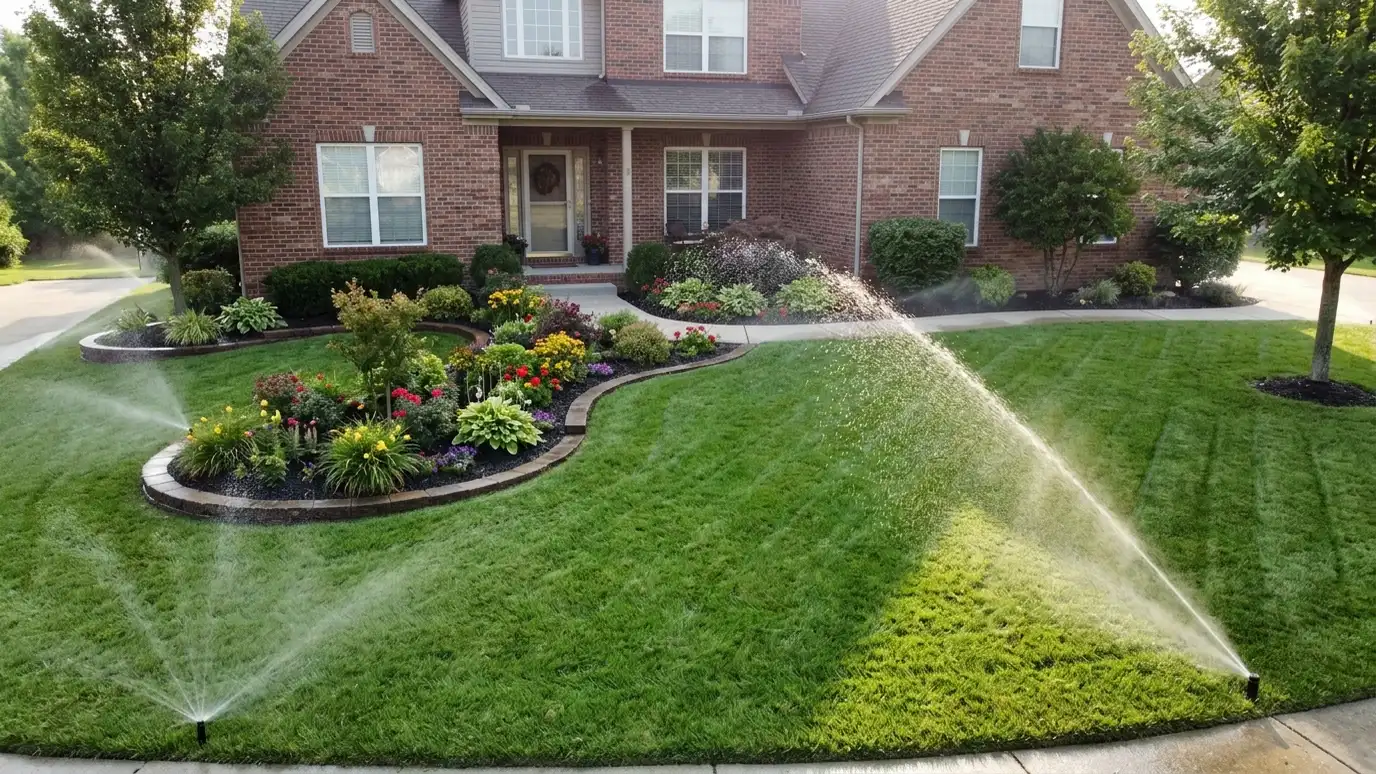
Heads are the visible part. Spray heads fan out water in a fixed pattern, rotors throw slow streams over longer distances and drip lines deliver water drop by drop. Each type applies water at its own rate.
Nozzles shape the pattern, and matching them within a zone is the key to even watering.
The controller
The controller is the brain. It stores start times, run times and watering days and sends signals to the valves in order. Basic controllers run a fixed schedule. Smart ones adjust to weather.
Sensors can pause watering for rain or cold, and flow sensors can shut the system down if something breaks.
Why design matters
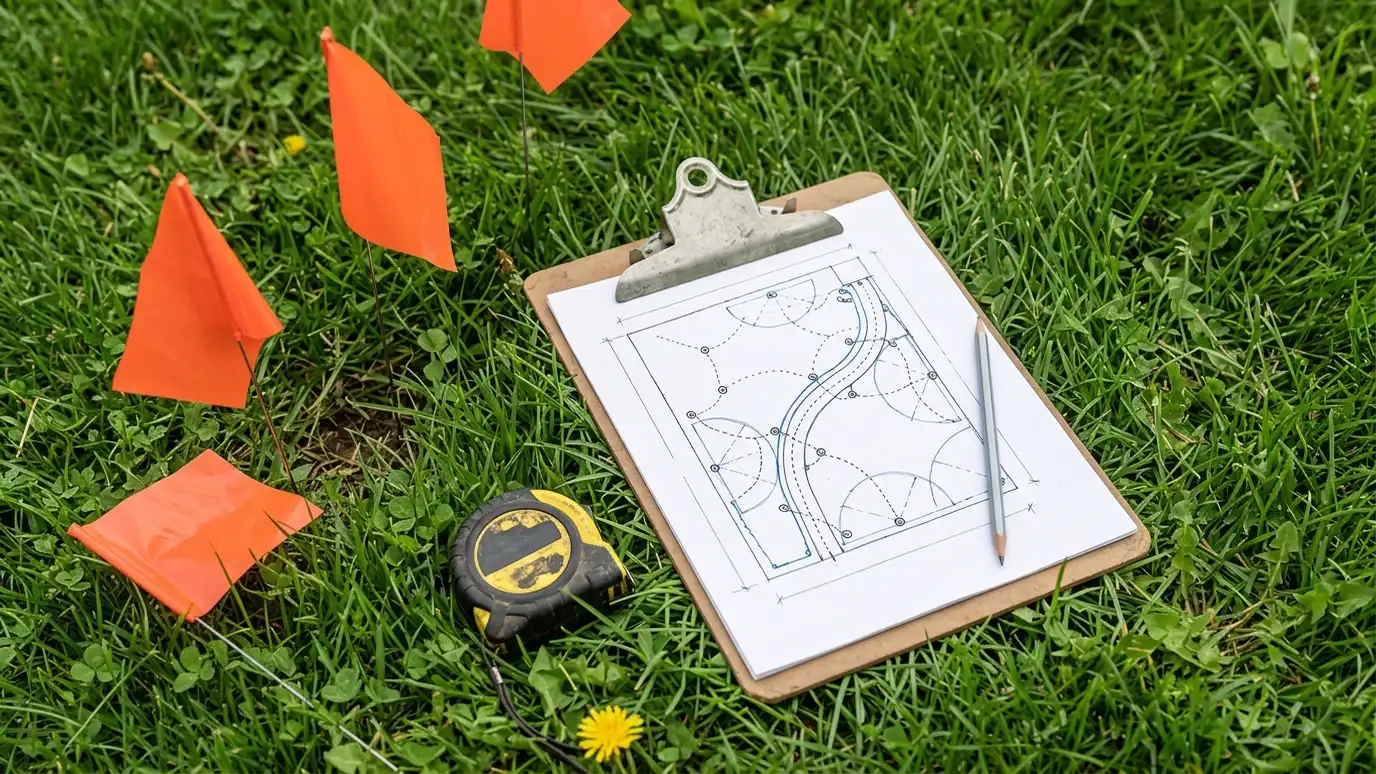
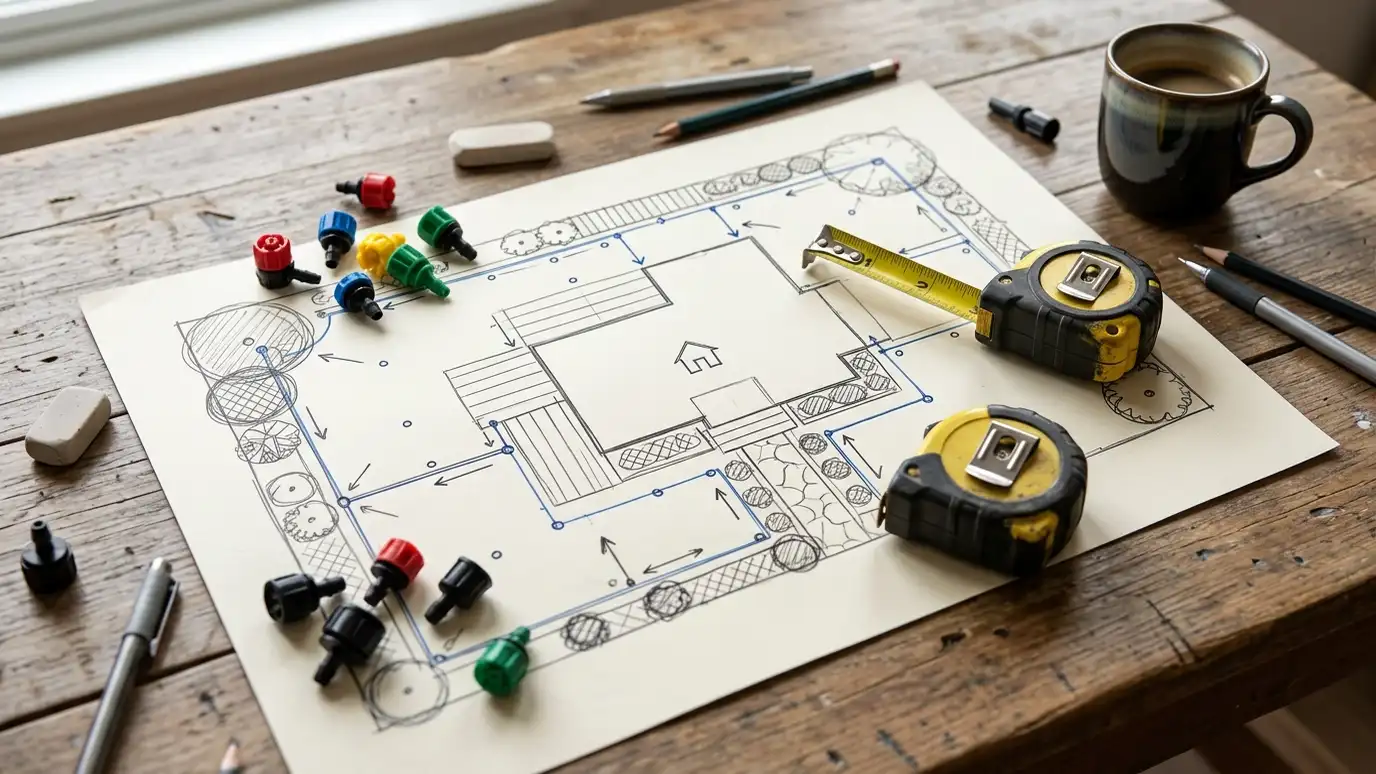
Pressure and flow decide how many heads can run together. Spacing decides whether coverage is even. Matching heads to the area decides how well plants are served.
A system laid out without those measurements often has dry spots, wet spots and a high water bill.
What you can check yourself
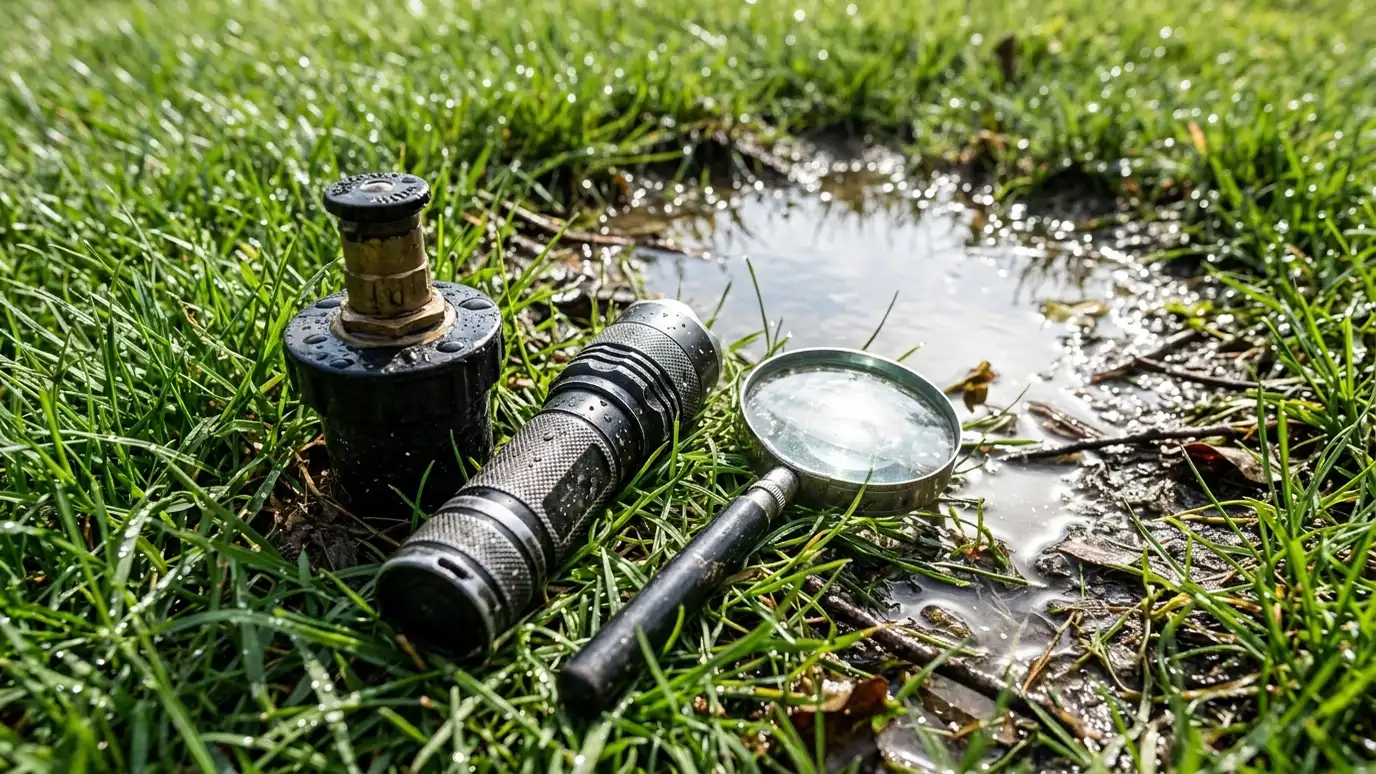
You can find your valve boxes, learn where the shut-off is, watch each zone run and read the controller schedule. You can also note which heads sit where, so you can describe a problem.
A short walk each month during the season helps you notice trouble early.
Learn where your shut-off, controller and valve boxes are, and watch each zone run once in a while.