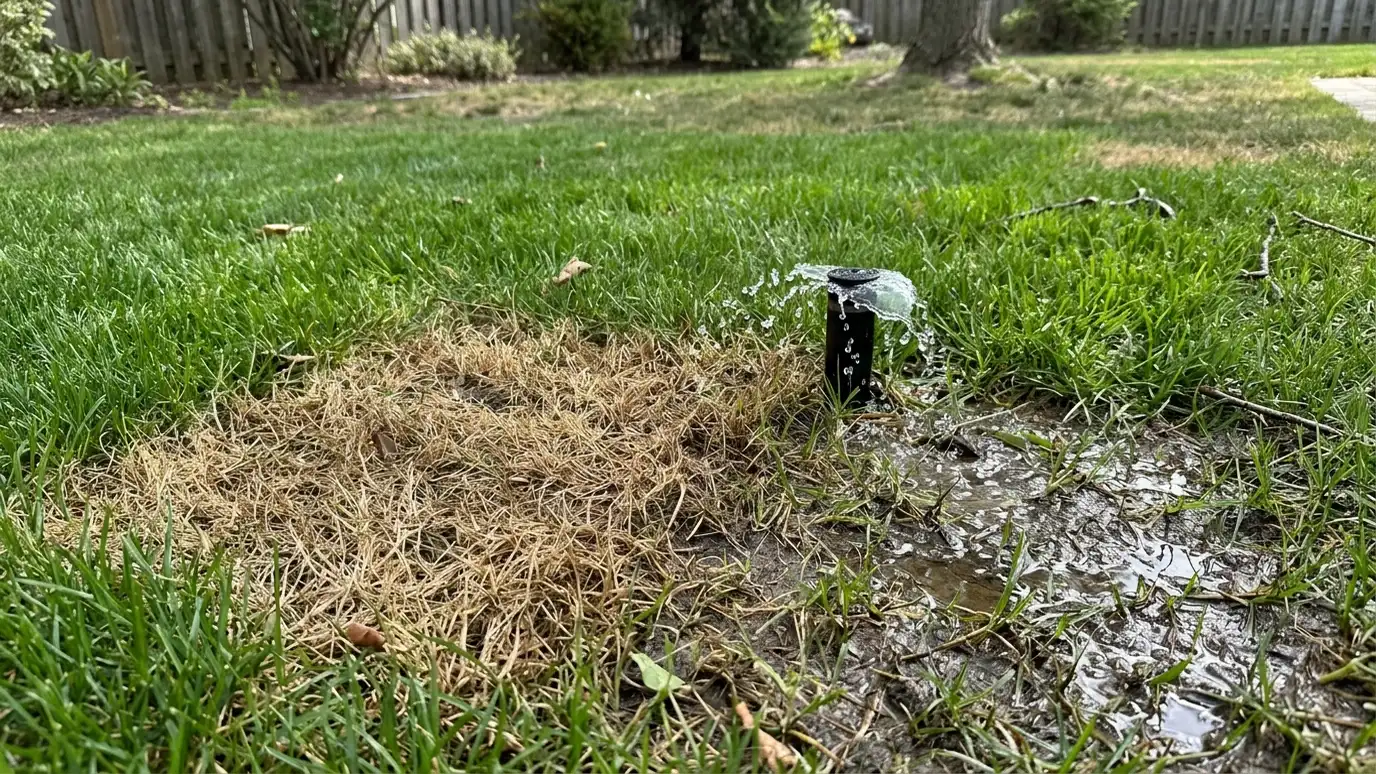
Dry patches and brown spots
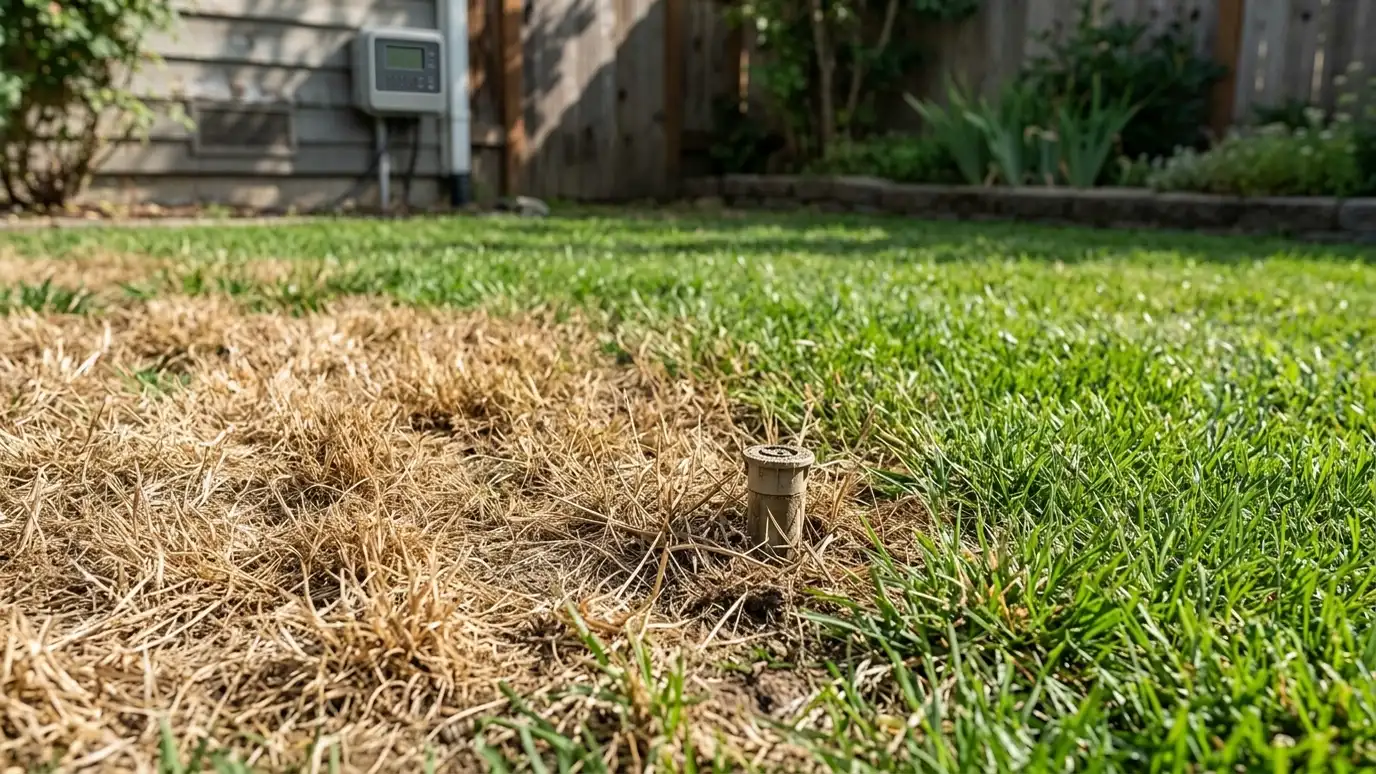
A brown patch that sits in the same place every summer often points to a broken, clogged or misaimed head, not just the weather. Check whether the heads around it are spraying and whether water reaches the spot.
Dry strips between heads suggest poor spacing or tilted heads. Brown spots near pavement can come from heat, not water, so look closely.
Wet spots and puddles
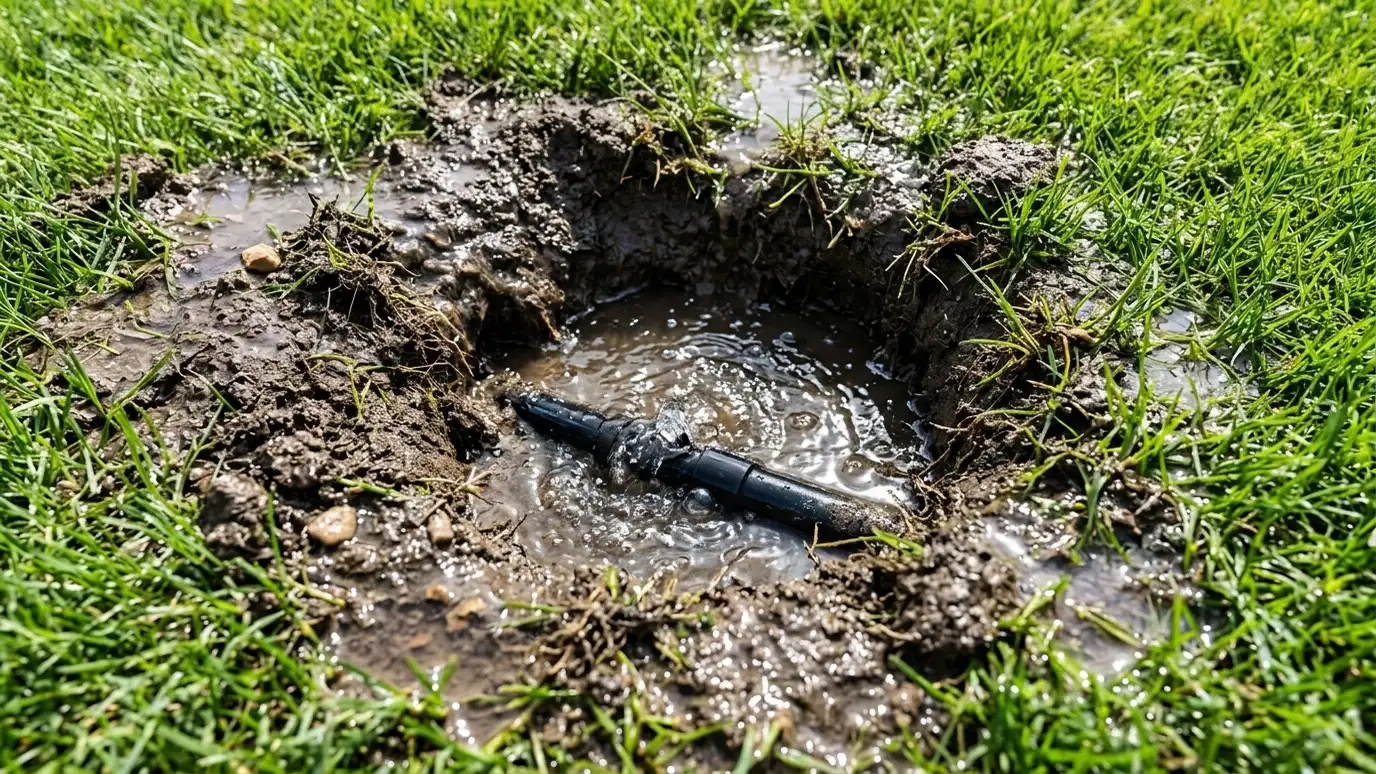
A soggy area, especially one that stays damp when the system is off, can mean a leak, a stuck valve or a head that drains after each cycle. Mushrooms, moss and unusually green grass nearby are clues.
Water running into the street or standing on the lawn can also mean the schedule applies water faster than the soil can absorb it.
Weak, misting or crooked spray
Spray that is weak, short or lopsided usually means a clogged nozzle, low pressure or a worn head. Heavy misting suggests pressure is too high. Heads that lean or sit low need to be reset.
Watch each zone run. A few minutes of observation shows more than a month of guessing.
Zones that do not behave
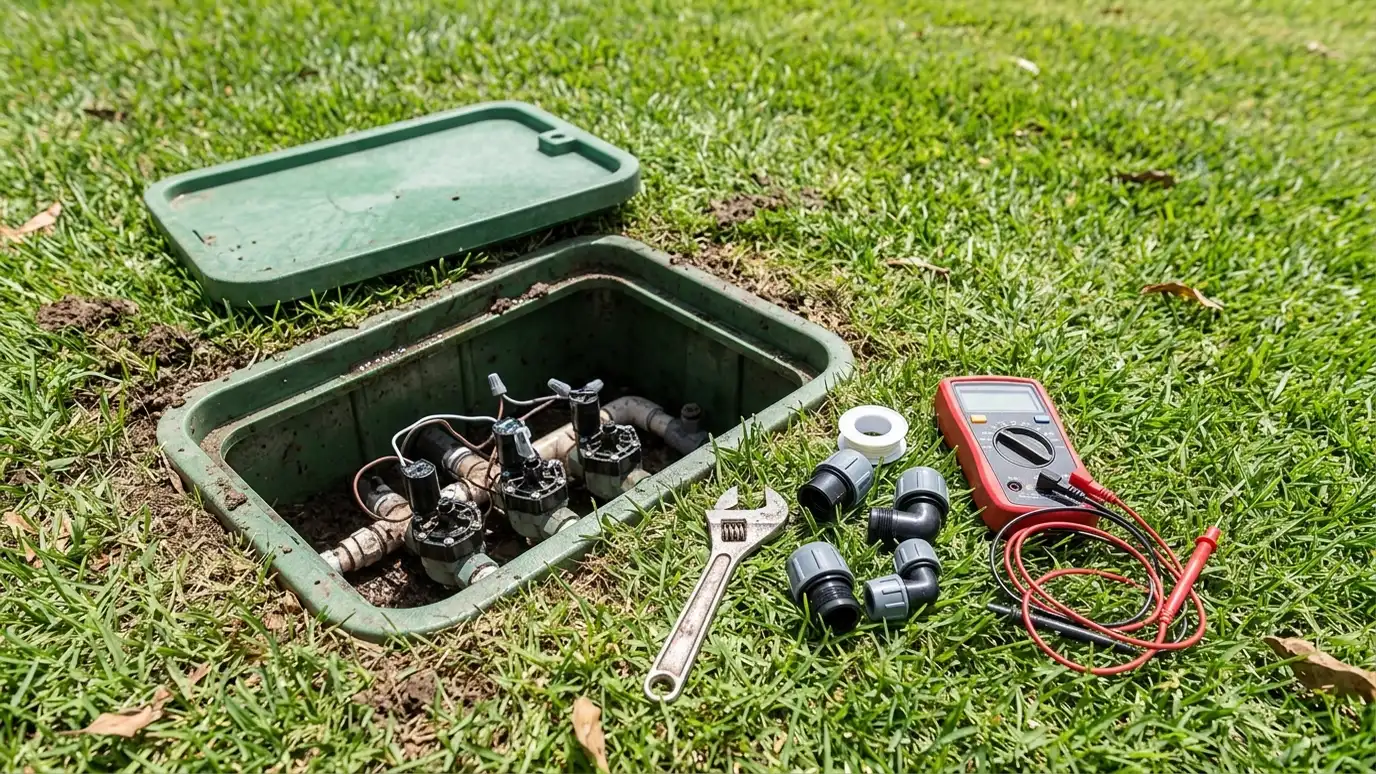
A zone that never starts, never stops or runs at the wrong time points to a valve, a wire or the controller. Several zones failing together may mean a controller or power problem.
A controller display that is blank, flashing or showing error messages needs attention too.
Sounds, pressure and bills
Banging pipes, hissing from a valve box and low pressure around the house can all be symptoms. A water bill that rises without more watering is one of the best signs of a hidden leak.
If the meter keeps moving when everything is off, call for help.
What to do next
Turn off the zone or the system if water is escaping, take a few photos and note which zones are affected. This helps us find the problem faster.
A diagnostic visit finds the real cause. Our problem checker can also help you narrow it down before you call.
Watch each zone run once a month during the season, and fix problems when they are small.