The basic rule
Most lawns do best with about an inch of water a week during the growing season, from rain and irrigation together. Delivered in one or two deep waterings, that encourages roots to grow down, where the soil stays cooler and moister.
Daily light watering keeps roots shallow and invites weeds and disease. Less often and deeper is almost always better for established lawns.
Cool-season and warm-season grasses
Many Tennessee lawns are tall fescue, a cool-season grass that grows well in spring and fall and struggles in midsummer heat. Bermuda and zoysia are warm-season grasses that thrive in heat and go dormant after frost.
Fescue may need more water in July and August to stay green. Warm-season lawns can handle dry spells better and need less water overall.
Time of day
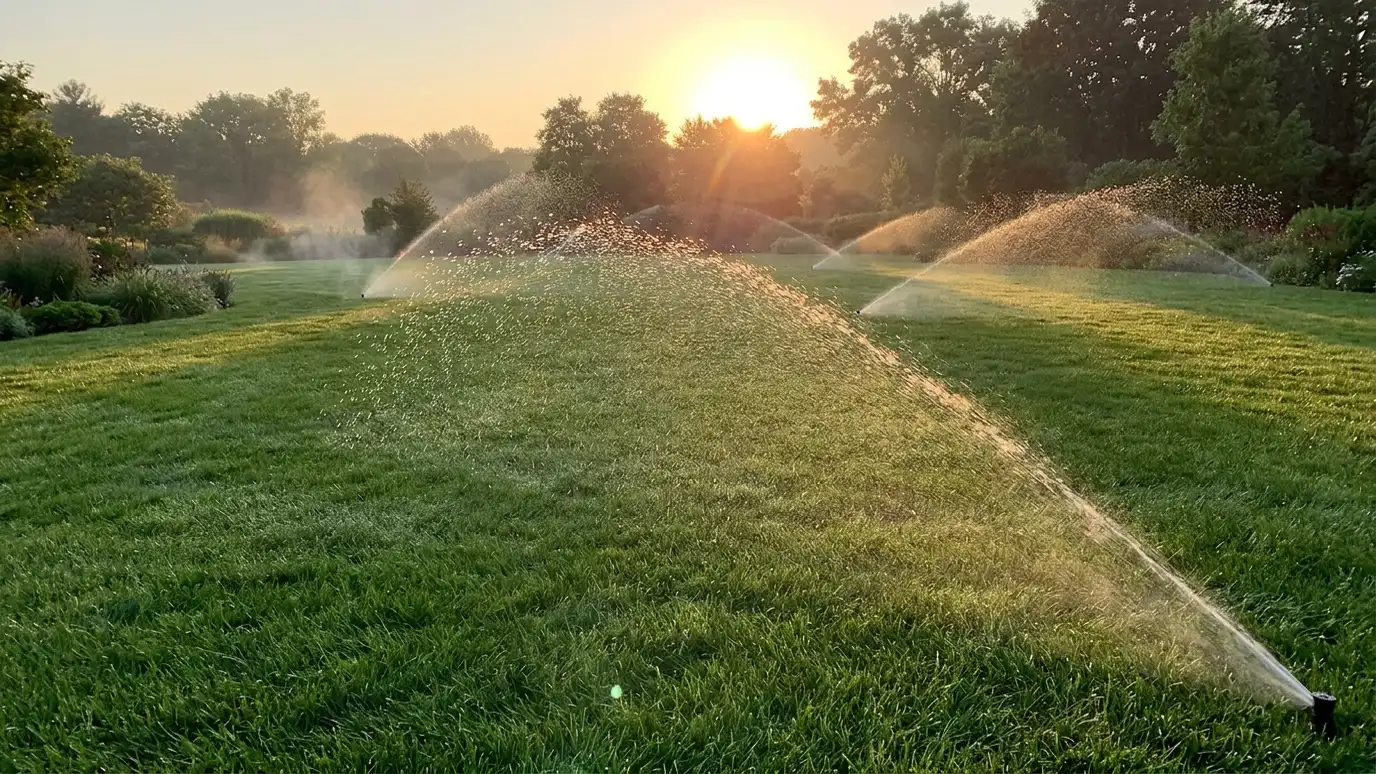
Early morning, before sunrise, is the best time. Wind is calm, water loses little to evaporation and leaves dry as the sun comes up. Evening watering can leave the lawn wet overnight, which favors disease.
Midday watering wastes water, though a quick syringe cycle in extreme heat is sometimes used on stressed turf.
Clay, slopes and shade
Clay soil absorbs slowly, so use short cycles with soak time between them. Slopes need the same approach, with check valves to stop low-head drainage. Shaded areas need less water than sunny ones, and often a separate zone.
Trees compete with grass for water, so shady lawns under big trees can still dry out.
Test your system
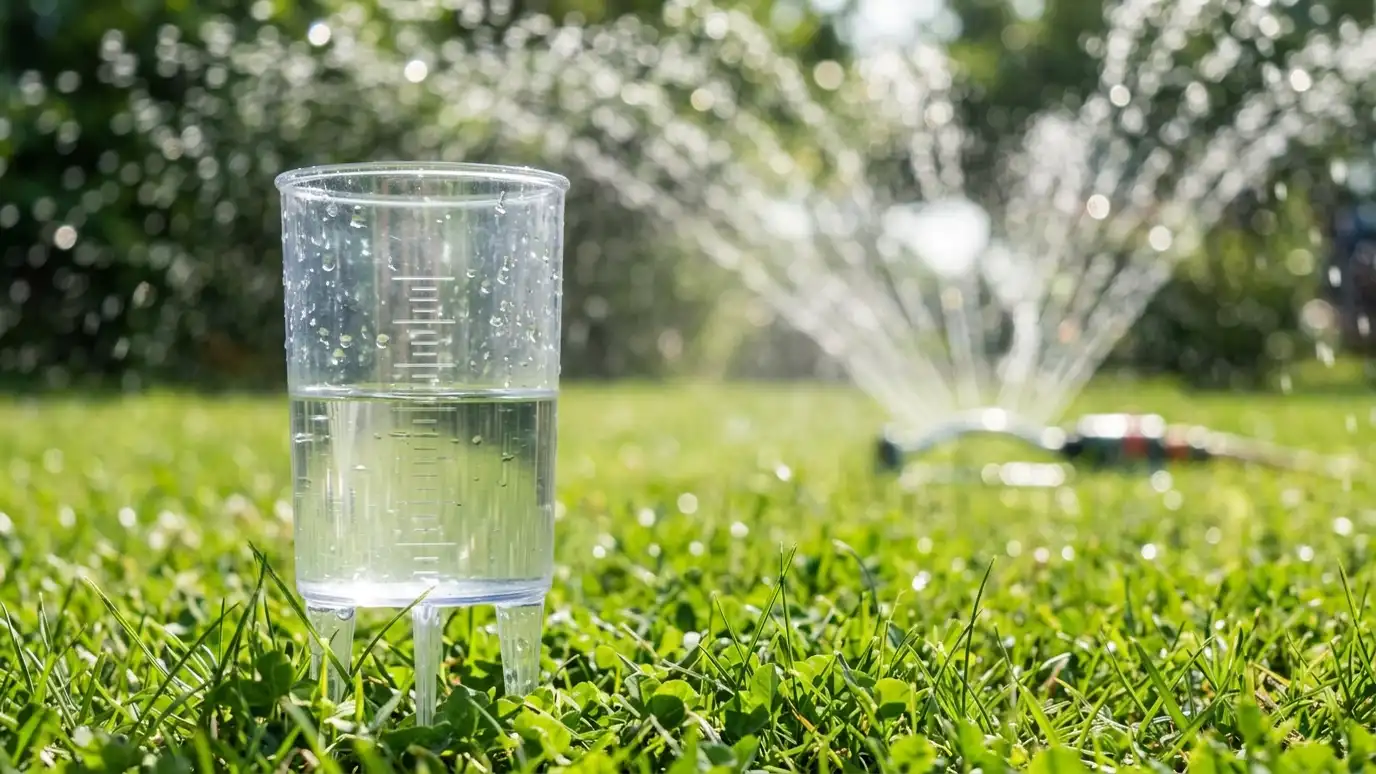
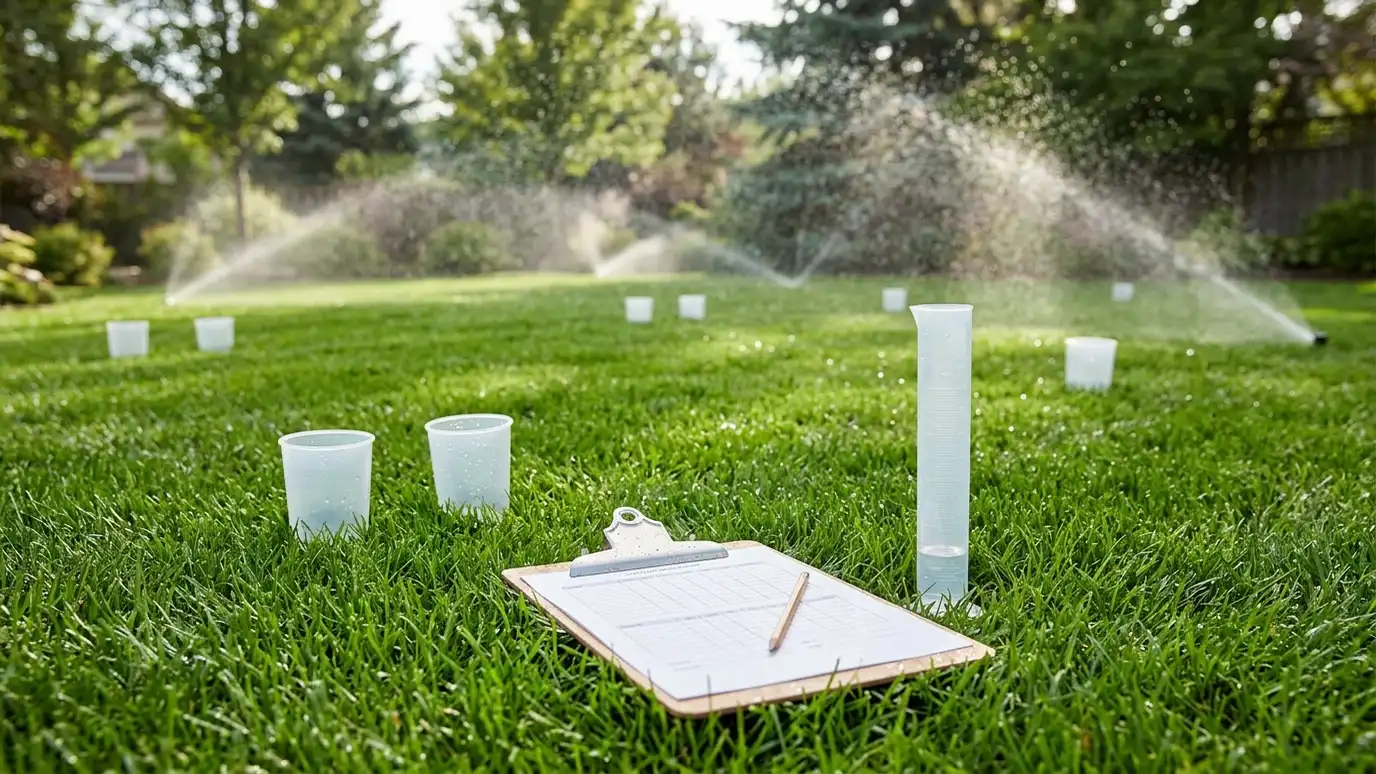
Set out a few empty tuna cans or cups, run a zone for fifteen minutes and measure the depth. That tells you how much water the zone applies and how evenly. Use the result to set run times.
Our watering calculator uses typical rates to give a starting point you can fine-tune.
Adjust through the season
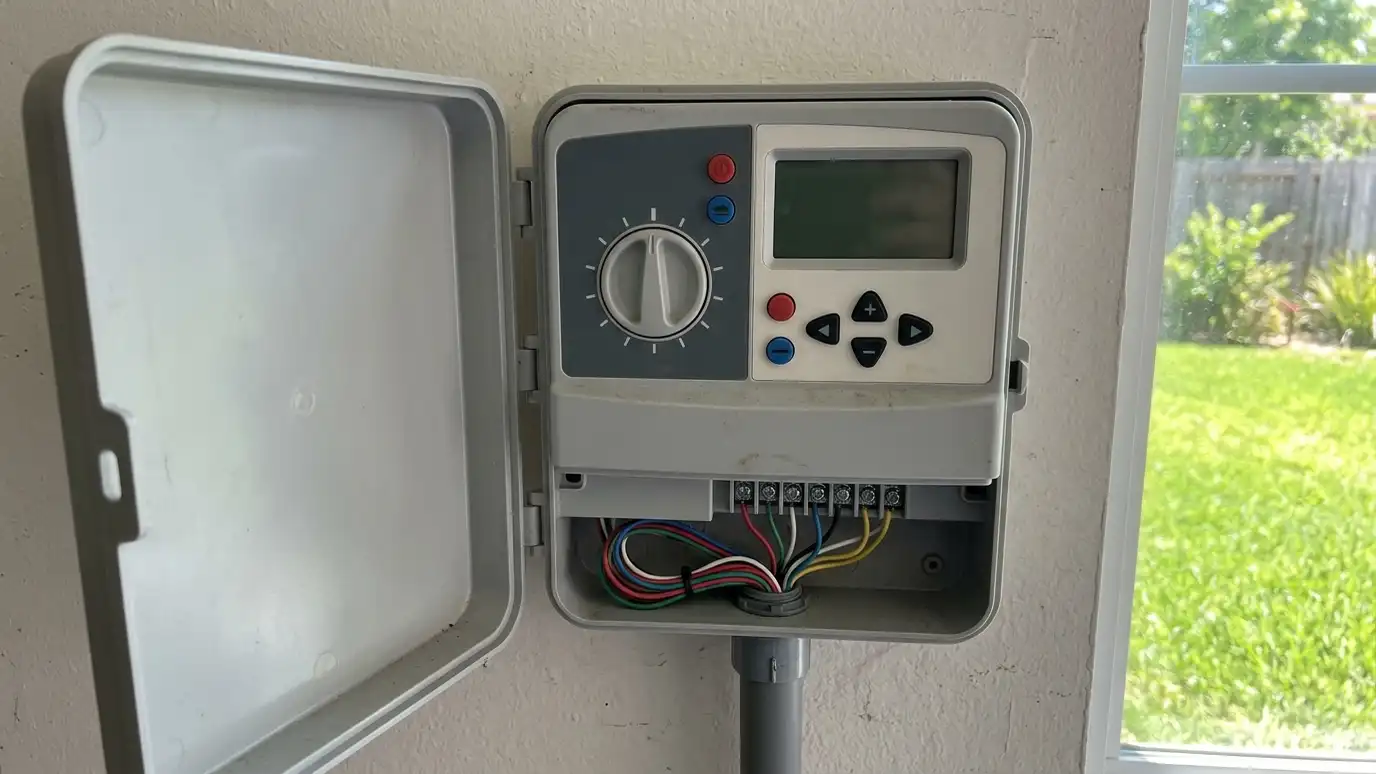
Spring and fall need far less water than summer. Skip watering after a good rain, and use a rain sensor or smart controller to help. New sod and seed follow a different schedule, with frequent light watering at first.
Watch the lawn. Gray-green color and footprints that stay pressed down mean it is thirsty.
Water deeply and less often, early in the morning, and let the soil and season set the schedule.