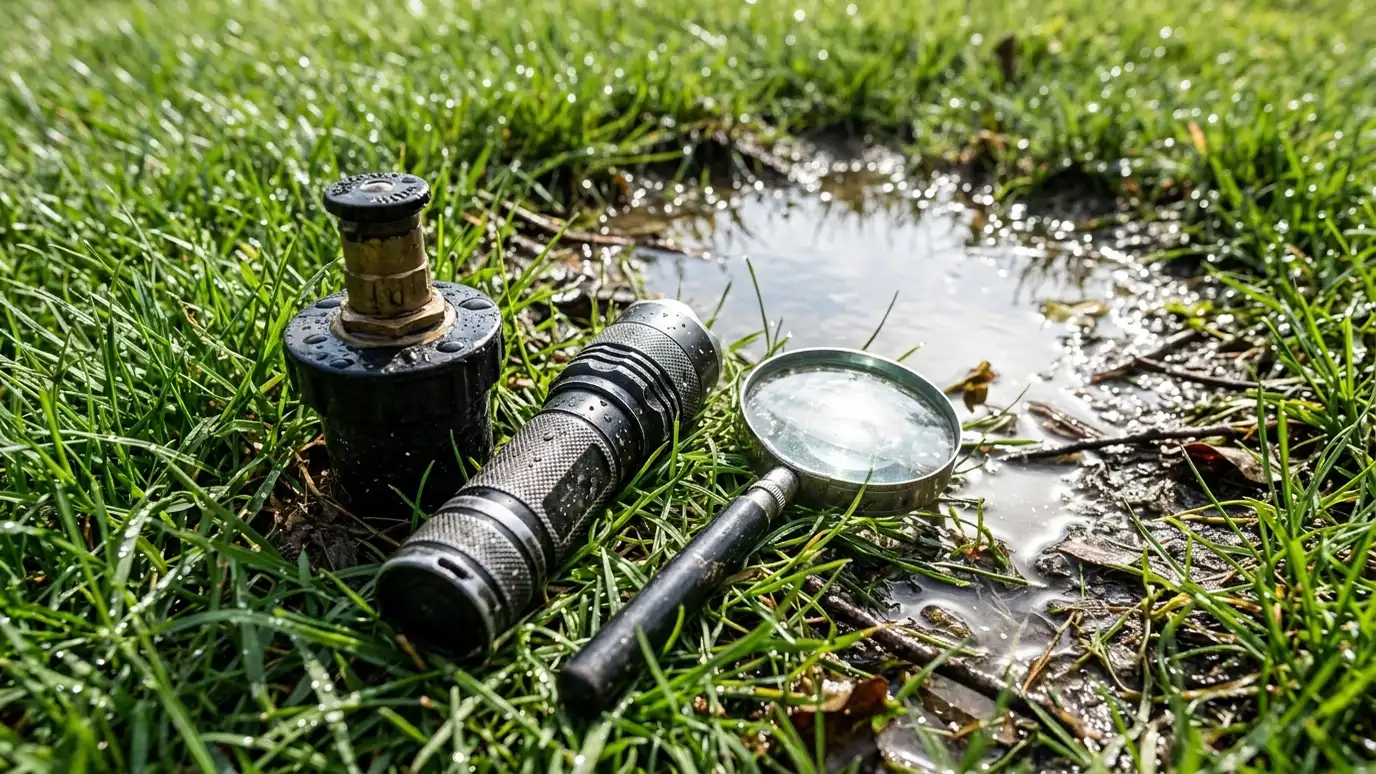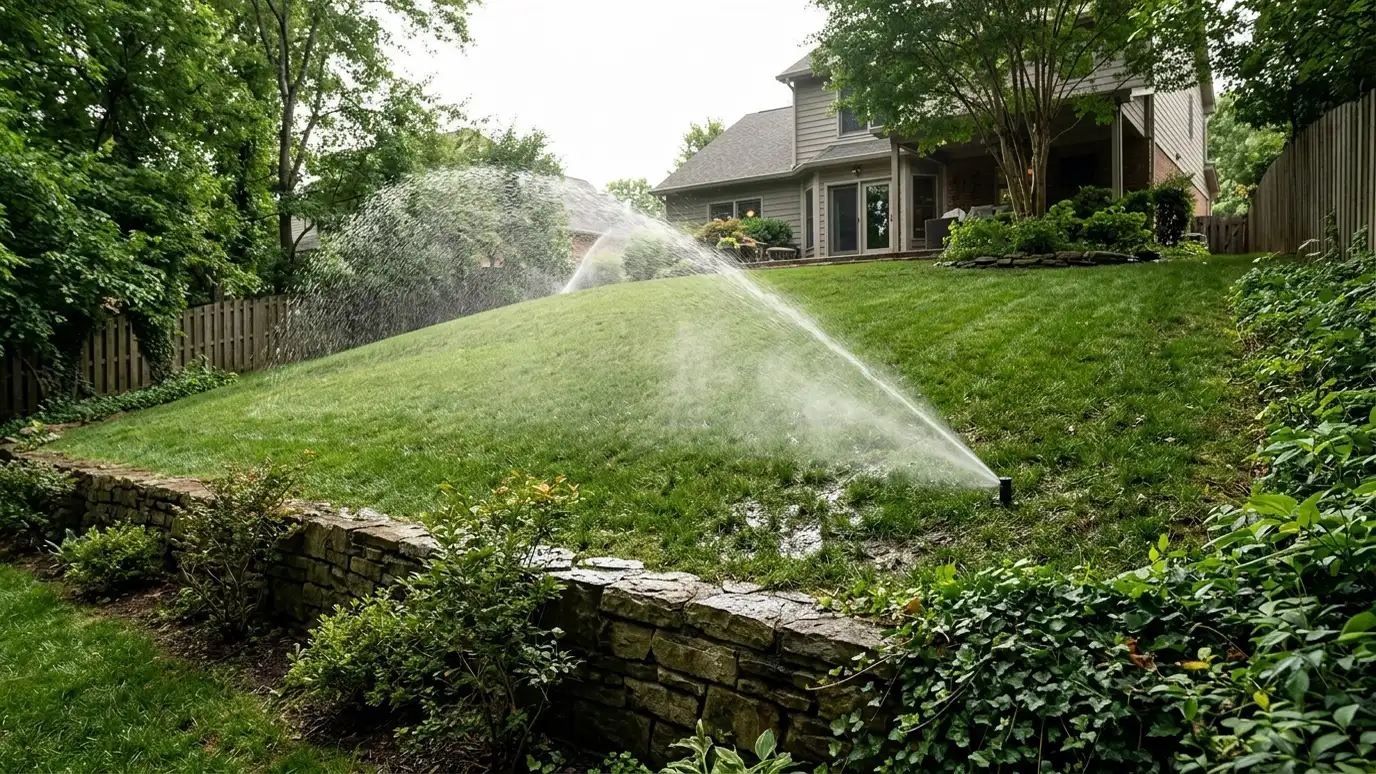
Irrigation designed for slopes and hills, with slower application, cycle and soak programming and the right heads to stop runoff and erosion.
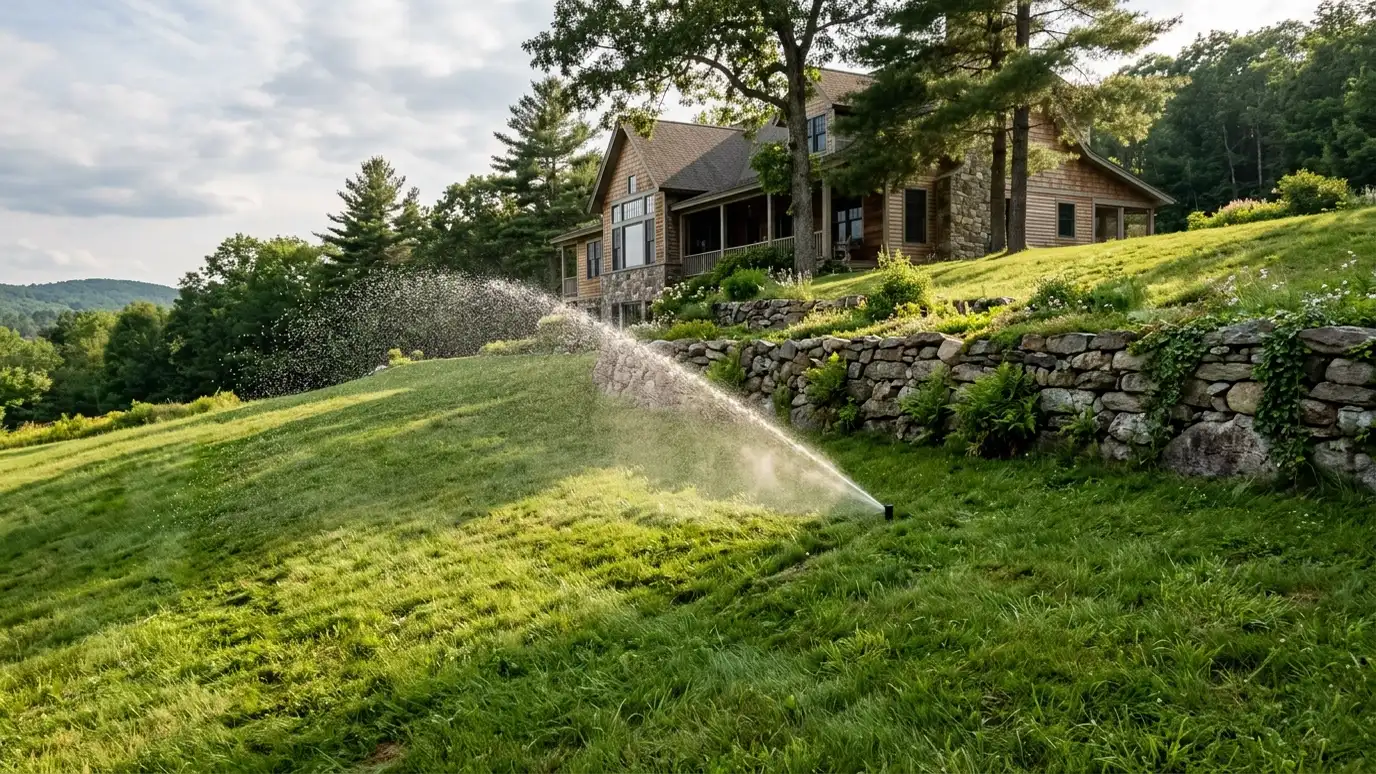
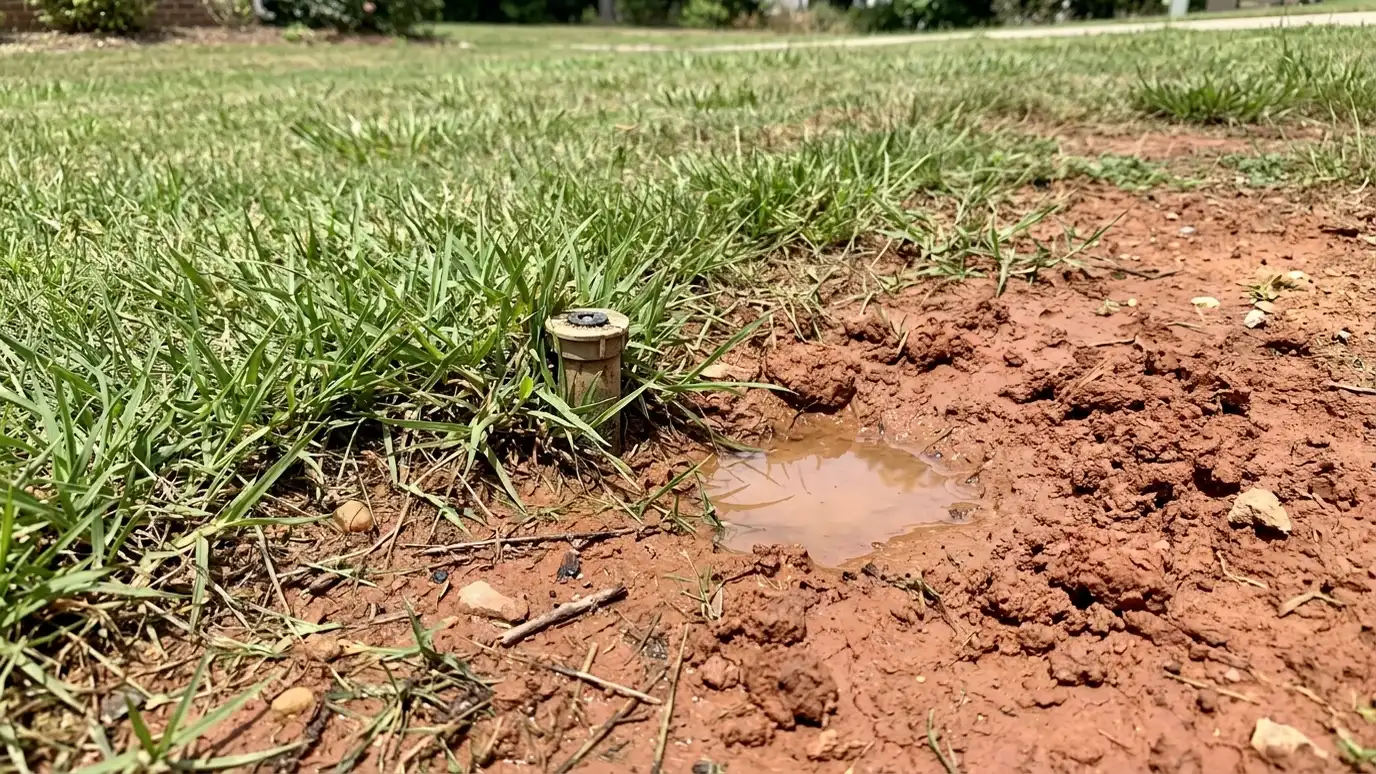
Middle Tennessee is hilly, and water behaves differently on a slope. A standard sprinkler pattern applies water faster than clay soil can absorb it, so on a slope the water runs downhill before it soaks in. The top of the hill stays dry, the bottom becomes soggy and the bare strip in between can erode. Many homeowners respond by running sprinklers longer, which makes runoff worse and the bill higher.
We design slope irrigation to put water down slowly and give it time to soak. Rotary nozzles and low-precipitation heads apply water gently. Slopes get their own zones, and we program cycle and soak, which breaks a run into short bursts with pauses between them. Check valves at the base of heads on the slope stop low heads from draining and flooding the bottom. For steep beds and banks, drip or ground-cover strategies add control.
Low-precipitation nozzles and rotary heads apply water slowly enough for clay soil to take it in.
Hills need different run times from flat areas, so we separate them in the design.
Short runs with pauses let water sink in, instead of running down the hill.
Check valves in heads on the slope stop low-head drainage that floods the bottom of the hill.
Drag the handle to compare.
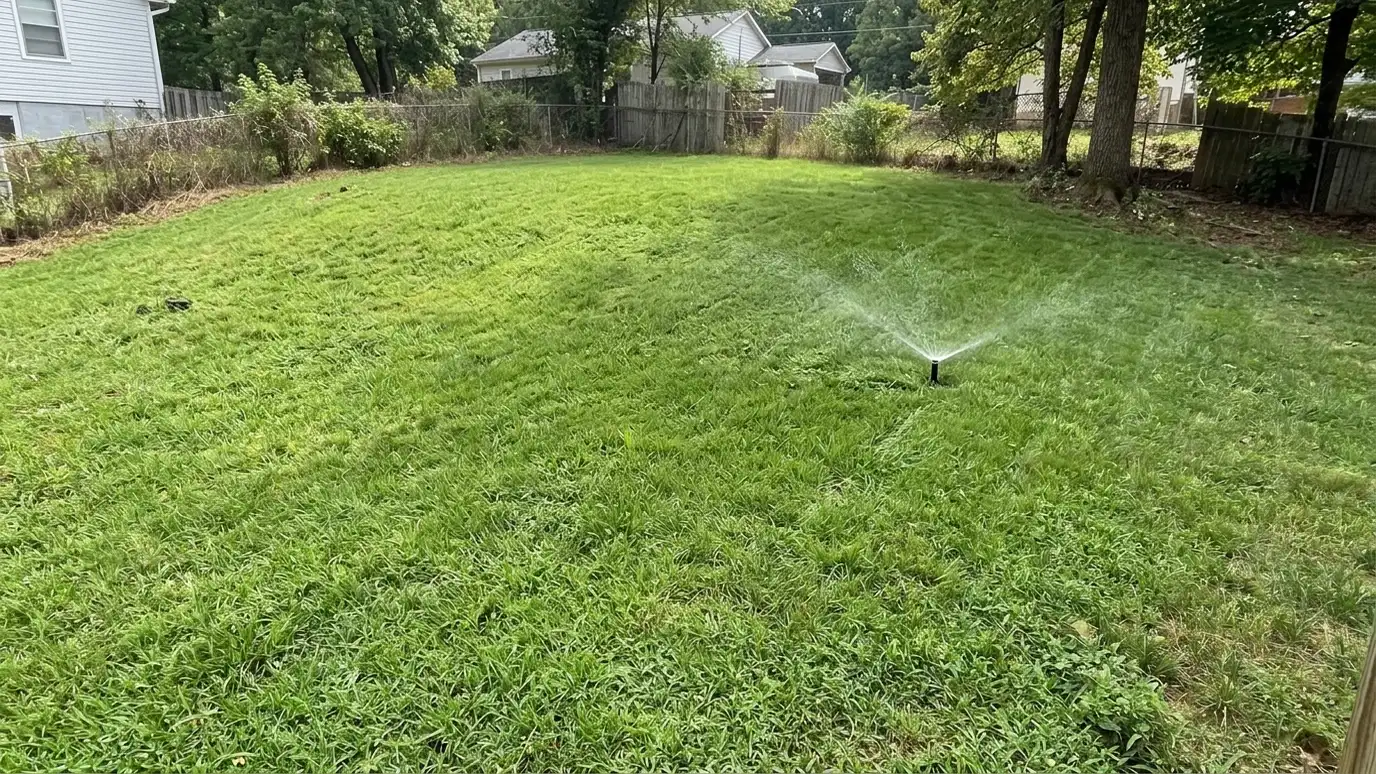
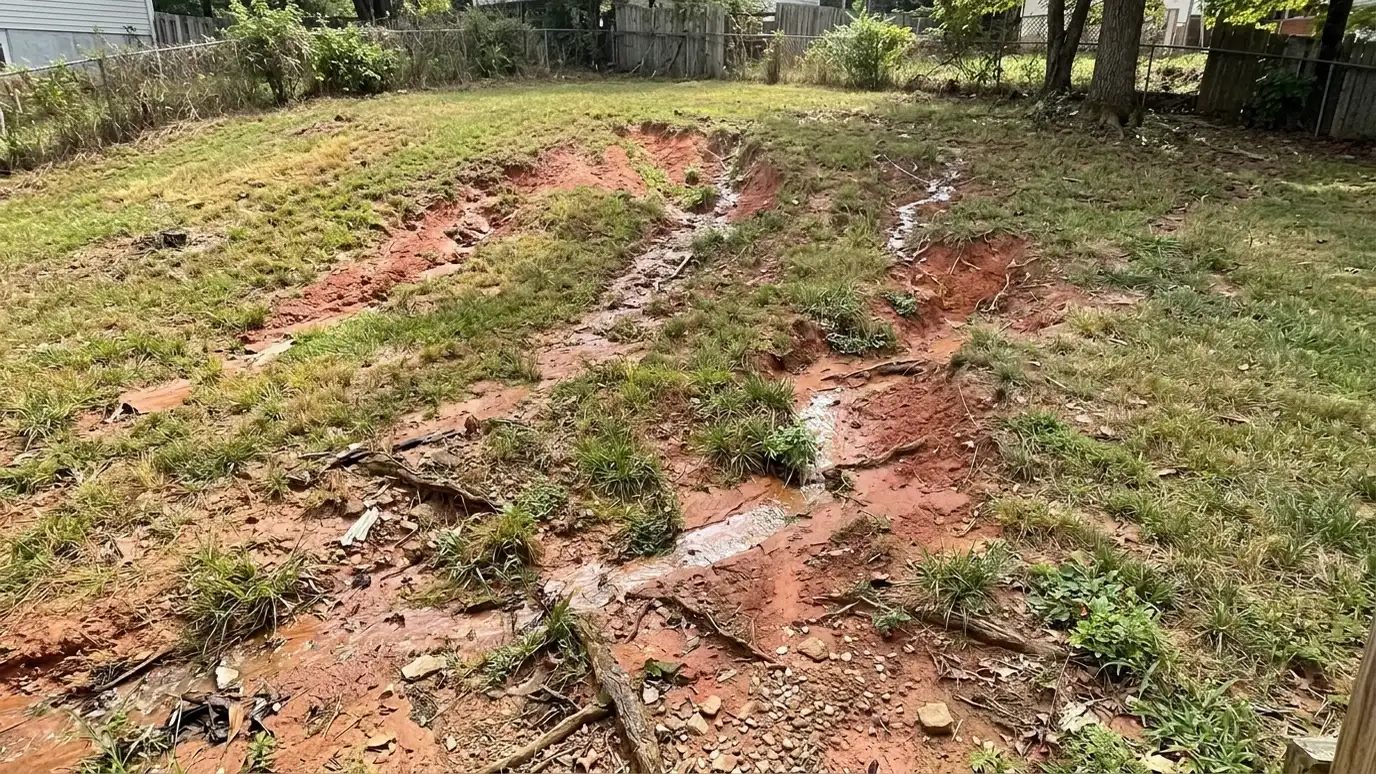 BeforeAfter
Made for hills.
Less runoff.
Matched run times.
Programmed in.
No low-head flooding.
Protects the slope.
Every topic has its own page with what to expect and how we approach it.
 Home situationSloped and Hilly YardsWater runs downhill, and so does your water bill. Here is how to irrigate slopes without runoff, dry…Learn more
 Home situationClay Soil YardsMuch of Middle Tennessee sits on clay, which drinks slowly and holds water. Here is how to water…Learn more
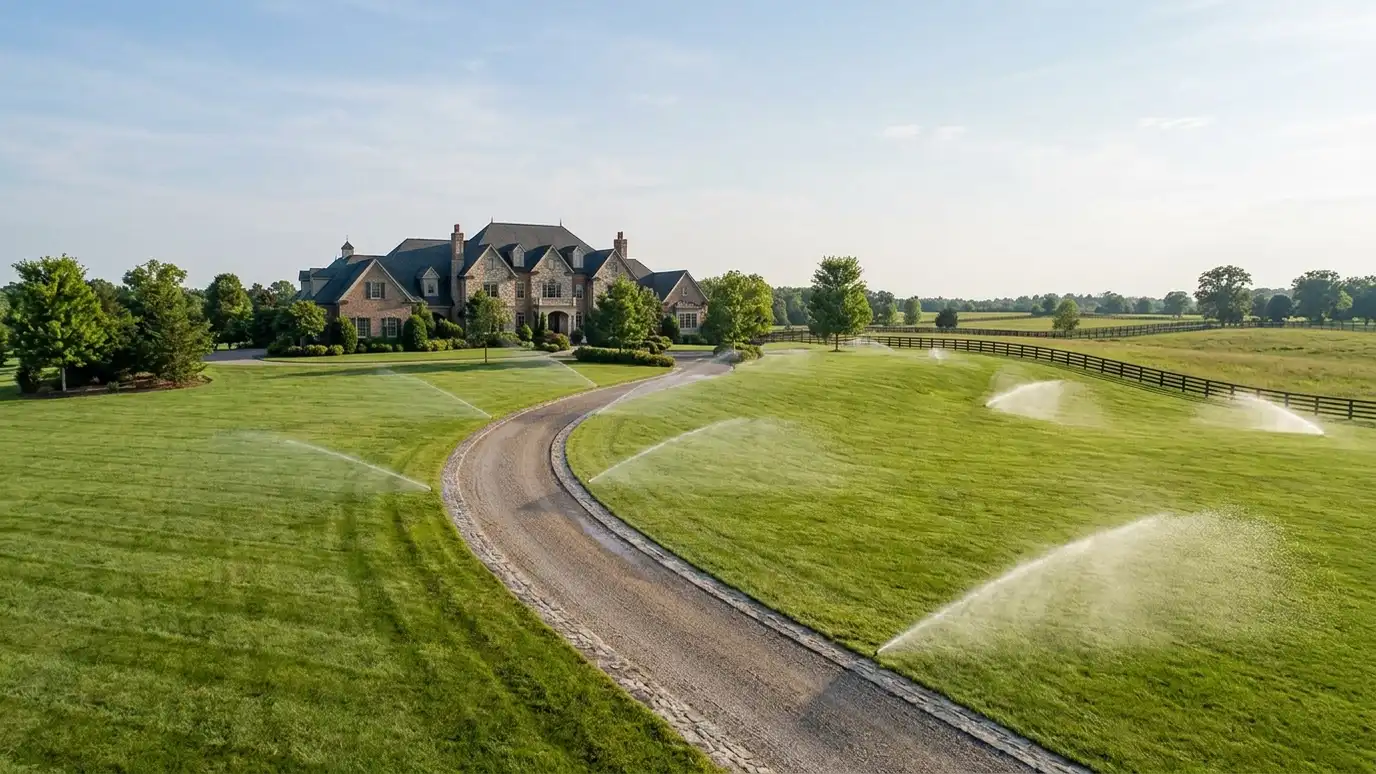 Home situationEstates and Large AcreageBig properties need big-picture irrigation: pumps, long runs, many zones and smart control. Here is how to plan…Learn more
Enter your lawn and bed areas, head type and water flow to see how many heads and zones a sprinkler system may need.
You tell us about your yard and what you want, a new system, a repair or a tune-up, and we set a visit that fits your day.
We walk the property, find the water source and valves, test pressure and flow, look at every head and zone and take photos of anything of note.
We explain your options for zones, heads, drip, controllers and savings, sketch the layout and give you a written scope with clear timing and pricing.
We arrange for underground utilities to be located, protect the lawn, driveways and beds and mark every head, valve and pipe run before we dig.
We install or repair pipe, valves, heads and wiring with the right parts for each zone, flush the lines and keep the site tidy as we work.
We program the controller, test every zone with you, walk through watering and winterizing in plain steps and set a reminder for your next check.
Sprinklers often apply water faster than clay soil can absorb it, and on a slope the excess flows downhill.
It splits a run into short cycles with pauses between them, so water soaks in rather than running off.
We can adjust irrigation so it stops making erosion worse. Regrading and planting may be needed as well.
They hold water in the line so low heads do not drain and flood the bottom of a slope after the zone shuts off.
For beds and banks, often yes. Drip applies water very slowly and keeps it at the roots.
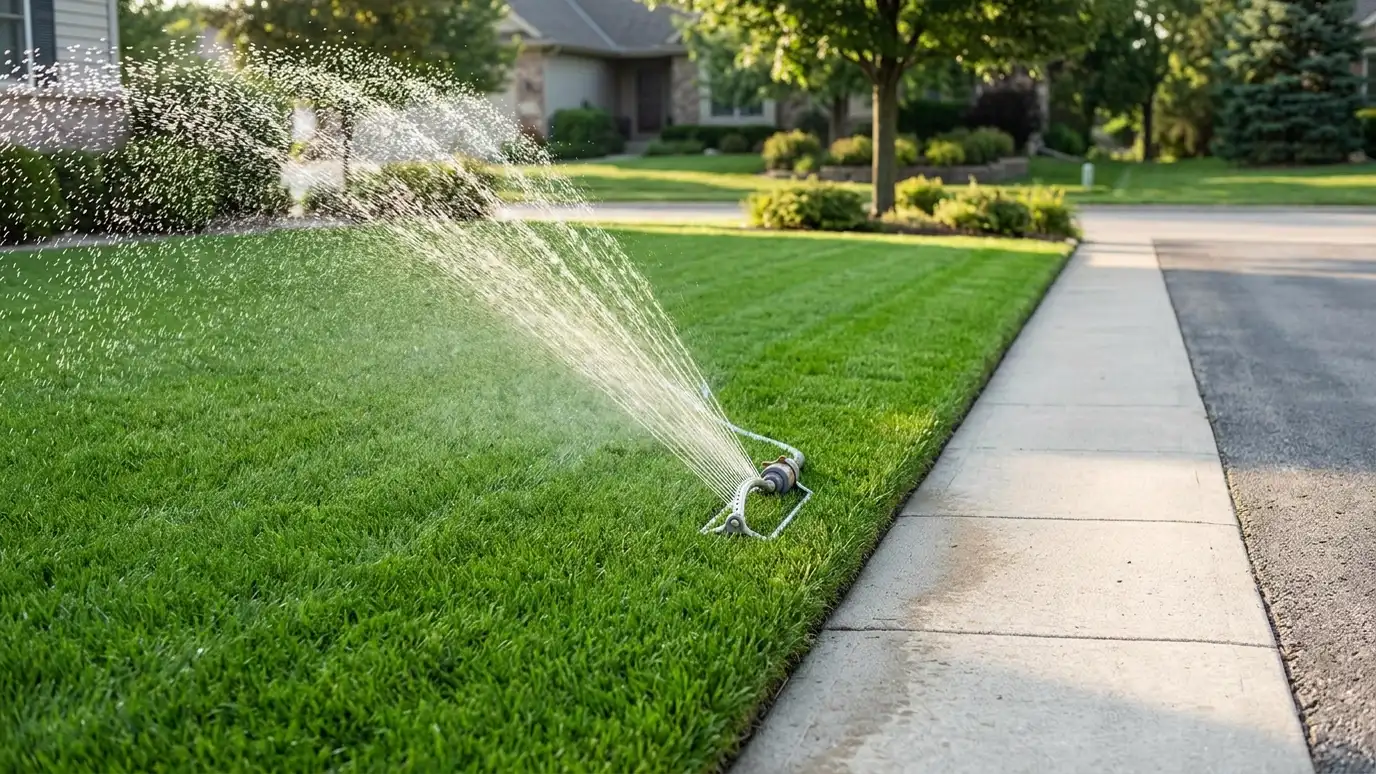 Overspray and Dry SpotsWasteful overspray, runoff and brown patches corrected by fixing coverage, matching nozzles and tuning schedules zone by zone.Explore
 System DesignA measured, zone-by-zone layout that matches heads, pipe and valves to your water supply, your plants and your…Explore
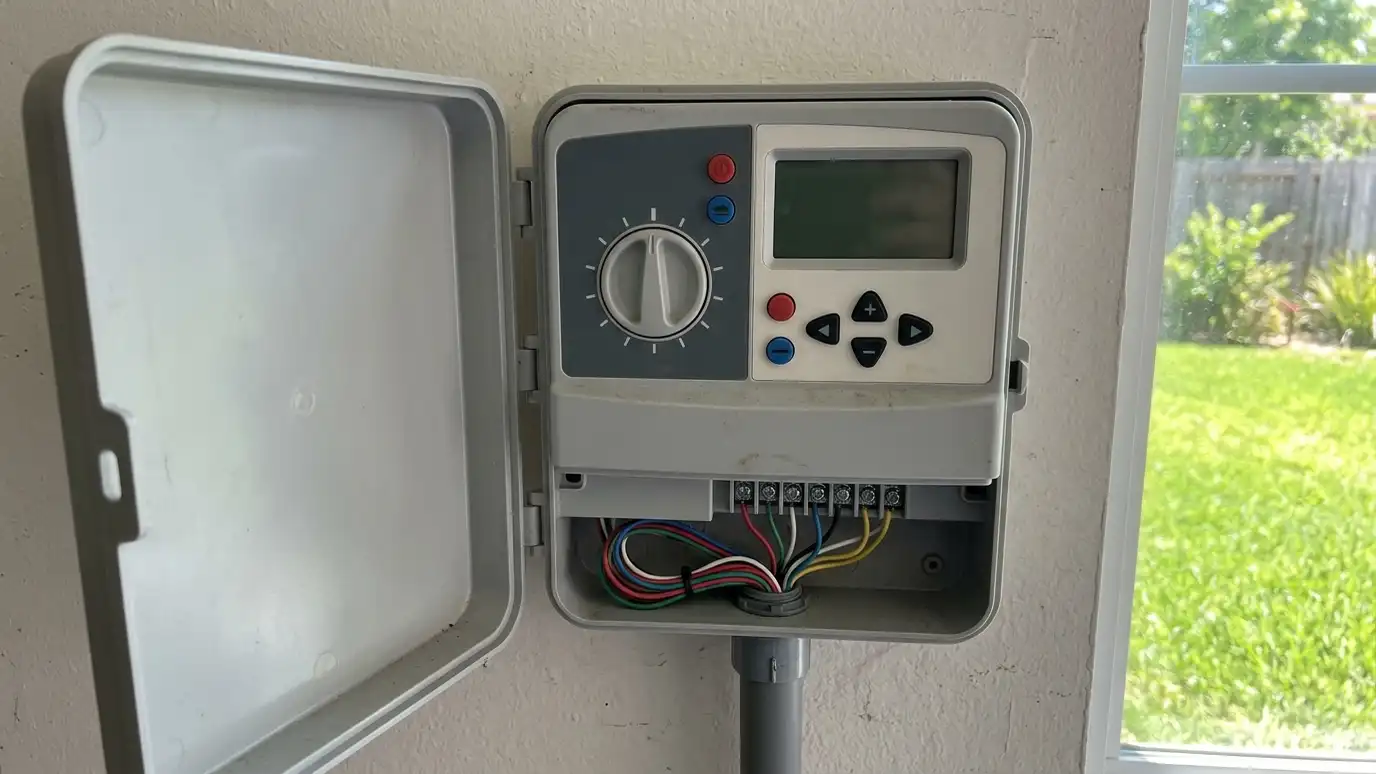 Scheduling and ProgrammingController programs built zone by zone for your plants, soil and season, with cycle and soak and seasonal…Explore
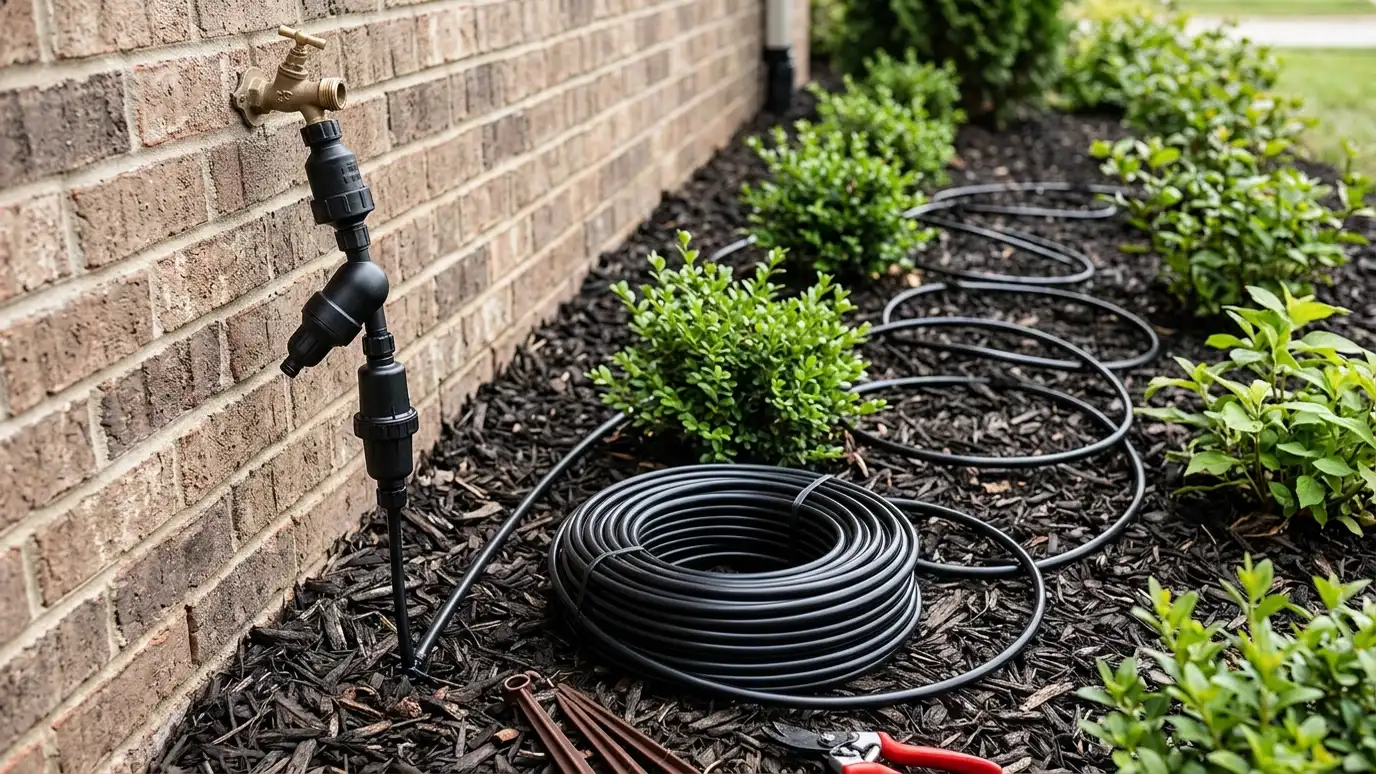 Drip InstallationDrip systems for beds, shrubs, trees, gardens and containers, designed with filters and regulators so every plant gets…Explore
Tell us about the project and we will call you back to talk it through.
Or call (615) 357-7797 to talk now.