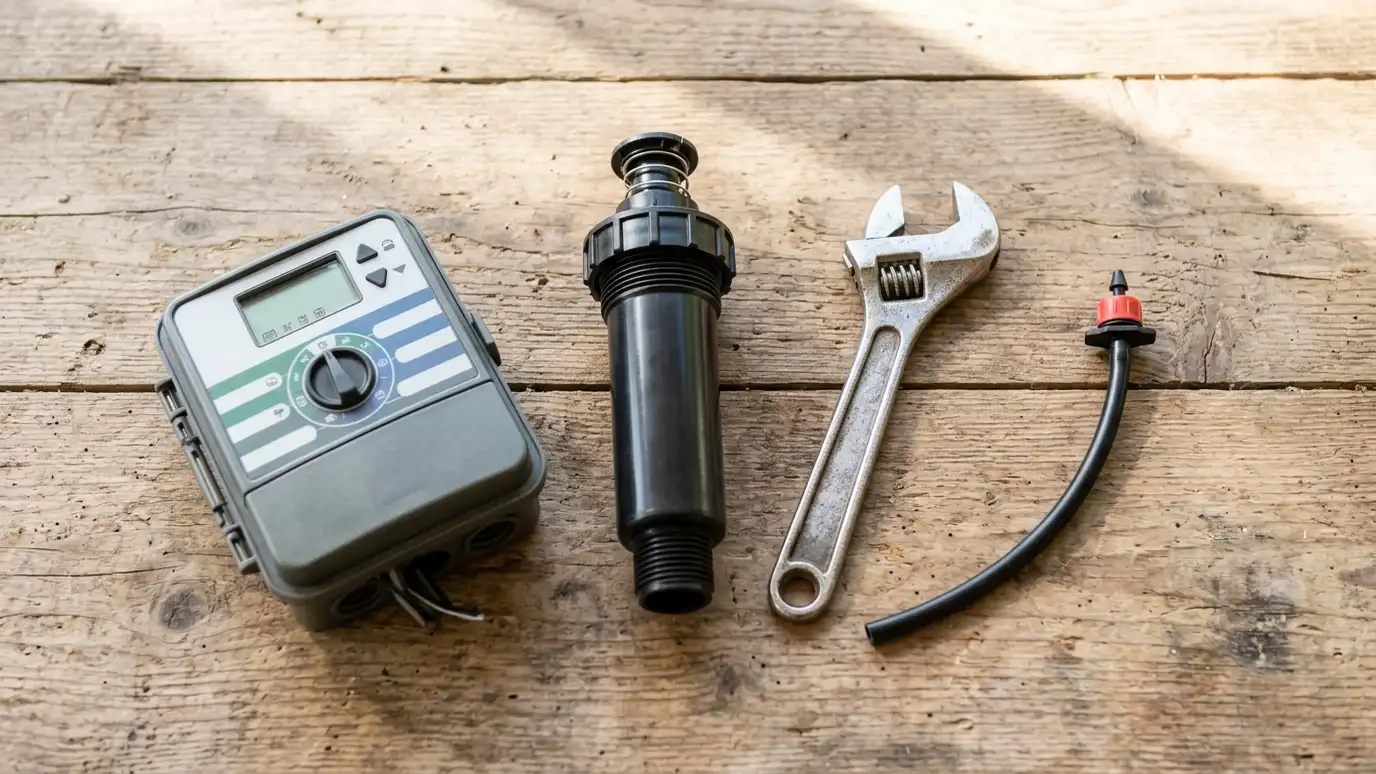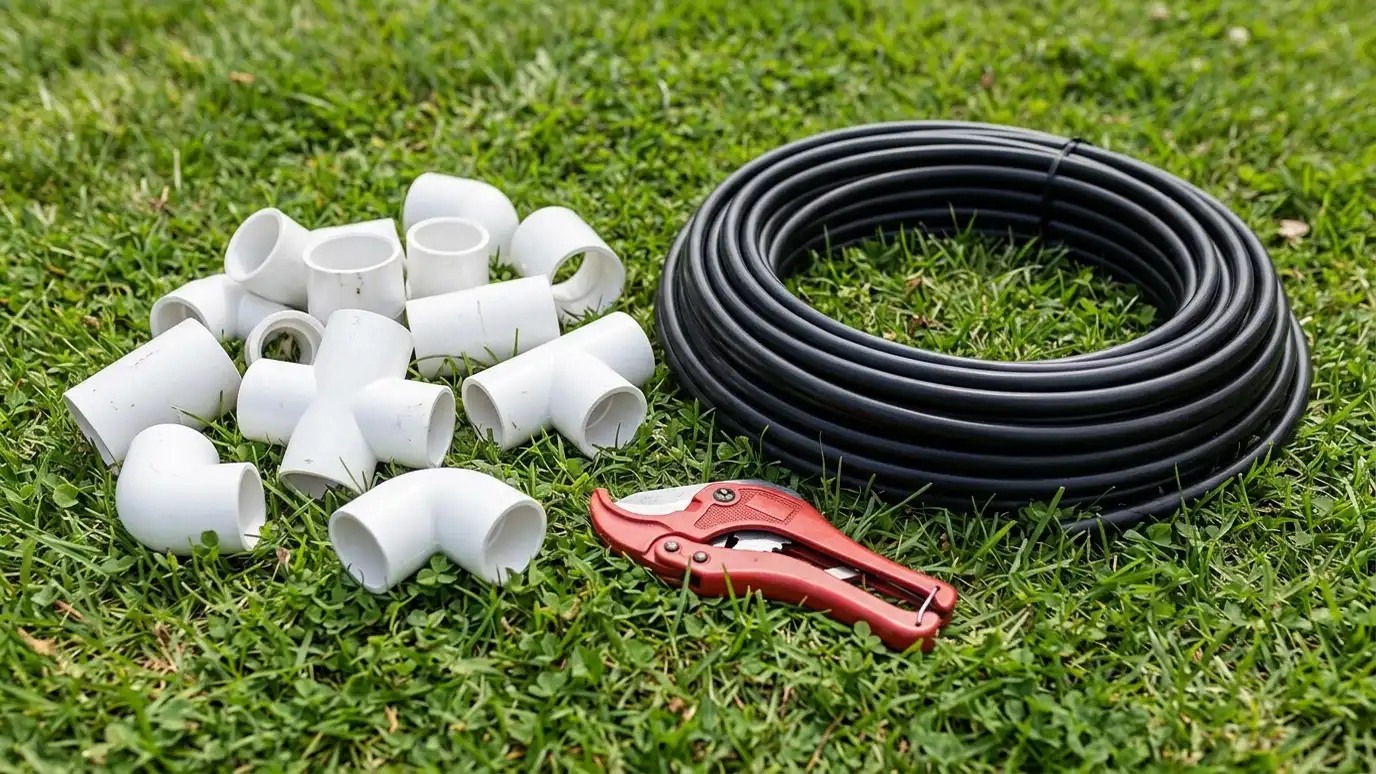
Irrigation pipe comes in rigid PVC and flexible polyethylene. Here is how they differ and where each is used.
Two kinds of pipe carry water to sprinklers. PVC is rigid white or gray plastic joined with solvent cement. It is strong, handles high pressure and is the standard for mainlines and many lateral lines in areas where the ground freezes. Polyethylene, or poly, is a flexible black pipe joined with insert fittings and clamps. It gives a little when water freezes, so it is common in cold climates, and it is easy to install with a pipe puller.
Each has a place. PVC makes sturdy, long-lasting lines and is simple to repair with couplings. Poly can be quicker to install in tight spaces and is more forgiving when freezing is possible. Fittings and connections are where most problems start, so careful installation, clean cuts and the right glue or clamps matter more than the pipe type itself. Depth, bedding and thrust blocks at turns also protect pipe from movement.
Strong and durable.
Forgiving in freezes.
Glue or clamps.
Match the job.
Protect the pipe.
Most failures start there.
Take the quiz, check a problem or ballpark a budget.
Each has strengths. PVC is rigid and strong, and poly is flexible and easy to install.
Yes. PVC uses couplings and cement, and poly uses insert fittings and clamps.
It varies, often six to twelve inches for laterals and deeper for mainlines.
 Equipment guideRotor SprinklersRotors throw water a long way in slowly turning streams. Here is where they shine, where they do…Learn more
 Equipment guideSpray Heads and NozzlesSpray heads pop up and fan water over small areas. Here is how nozzles differ and why matching…Learn more
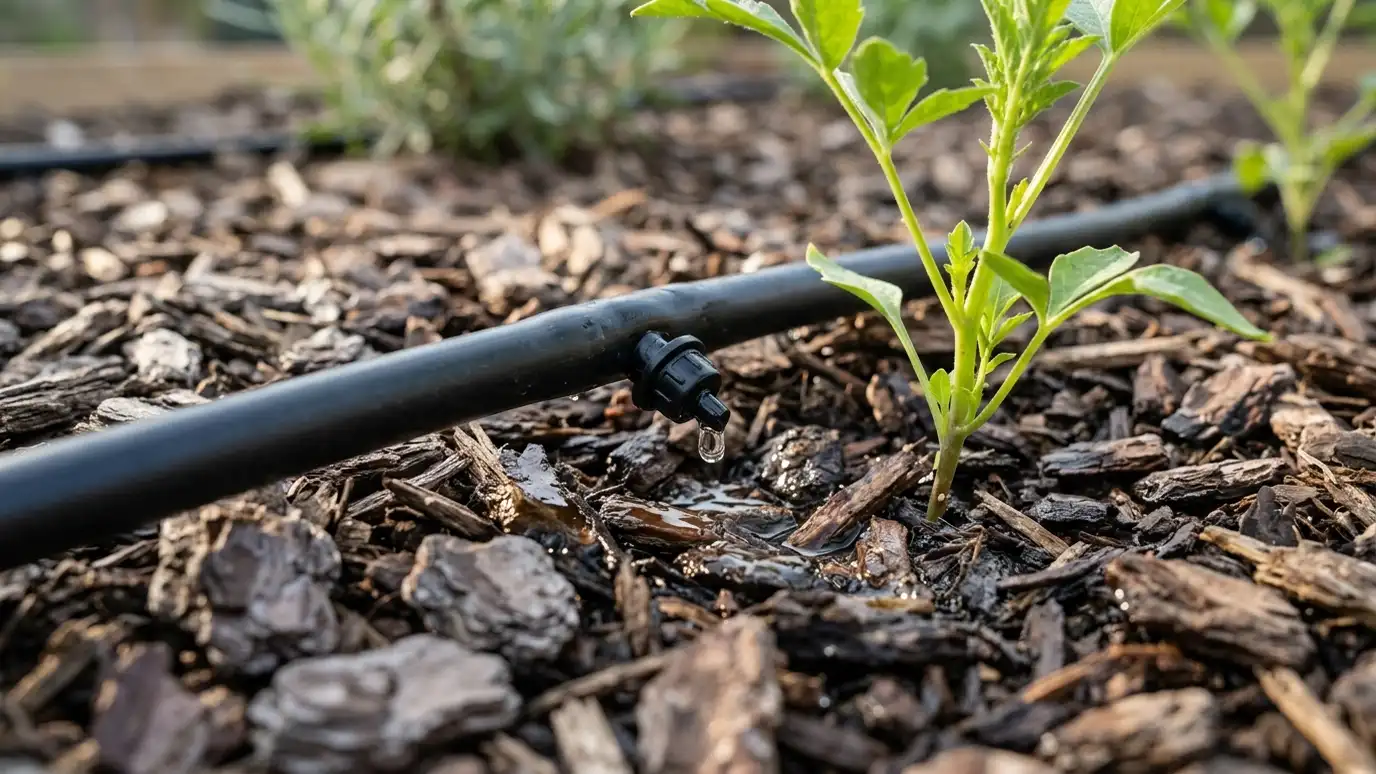 Equipment guideDrip Tubing and EmittersDrip delivers water slowly at the roots. Here is how tubing, emitters, filters and regulators fit together.Learn more
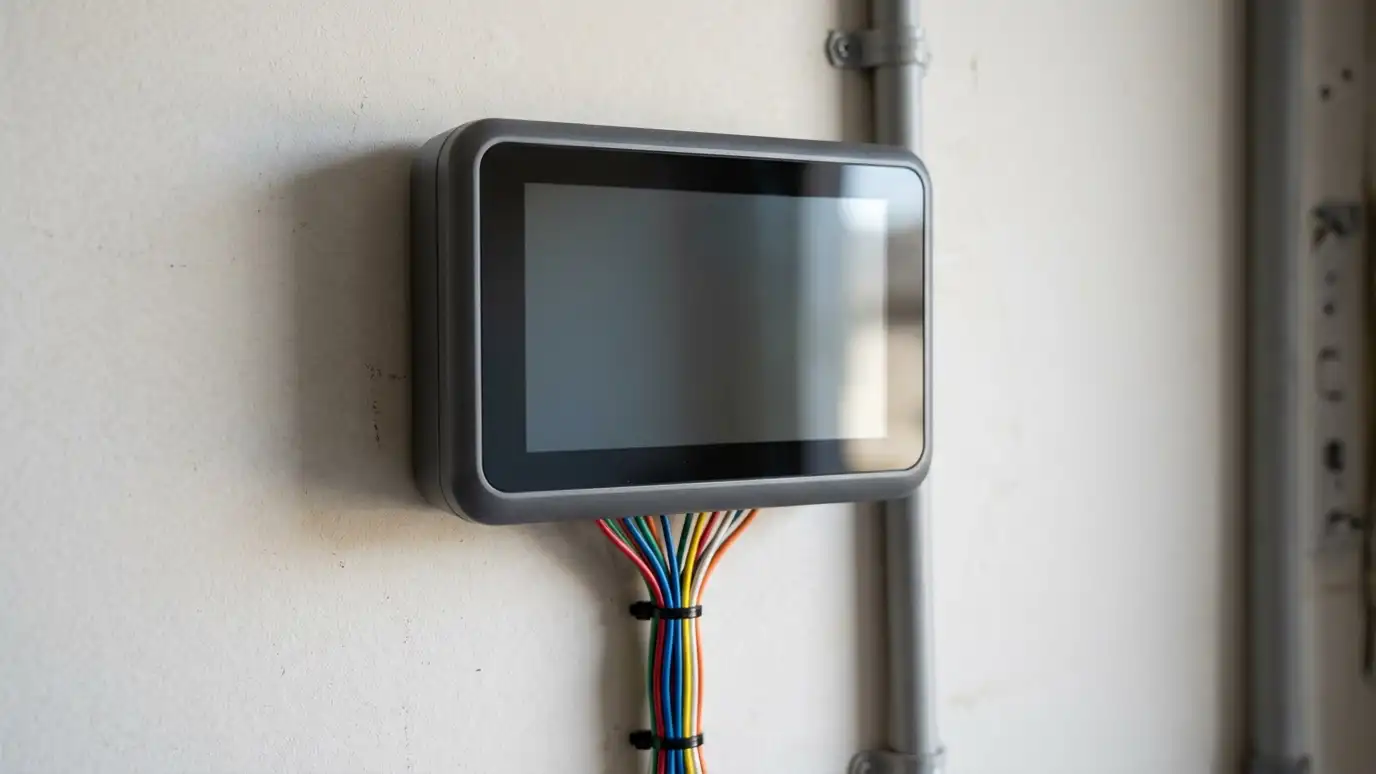 Equipment guideSmart ControllersSmart controllers adjust watering to weather and plant needs. Here is how they work and what to look…Learn more
Call us and we will walk your yard, test your water pressure and flow and give you a clear plan and a written scope for installation, repair or care.